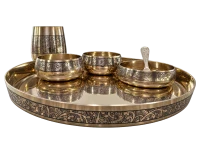
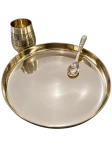
SPJ Kansa Thali Set Glossy Finish with engraved Design 6 Pcs Set
- Material : Kansa
- Brand : SPJ Angel
- Color or Design : Engraved Borders, Glossy Finish
- Product Type : Thali Set
- Size : 6 Pcs Set
 DELIVERY OPTIONS
| Weight of Single Thali Set | 1.67 Kg |
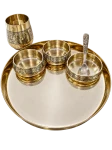
| Items in Set | Thali, Katori (2), Halwa Plate, Glass, Spoon |
| Diameter of Single Thali | 29 cm |
SPJ Kansa Thali Set, Glossy Finish with Engraved Design (6 Pcs)
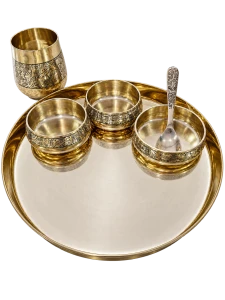
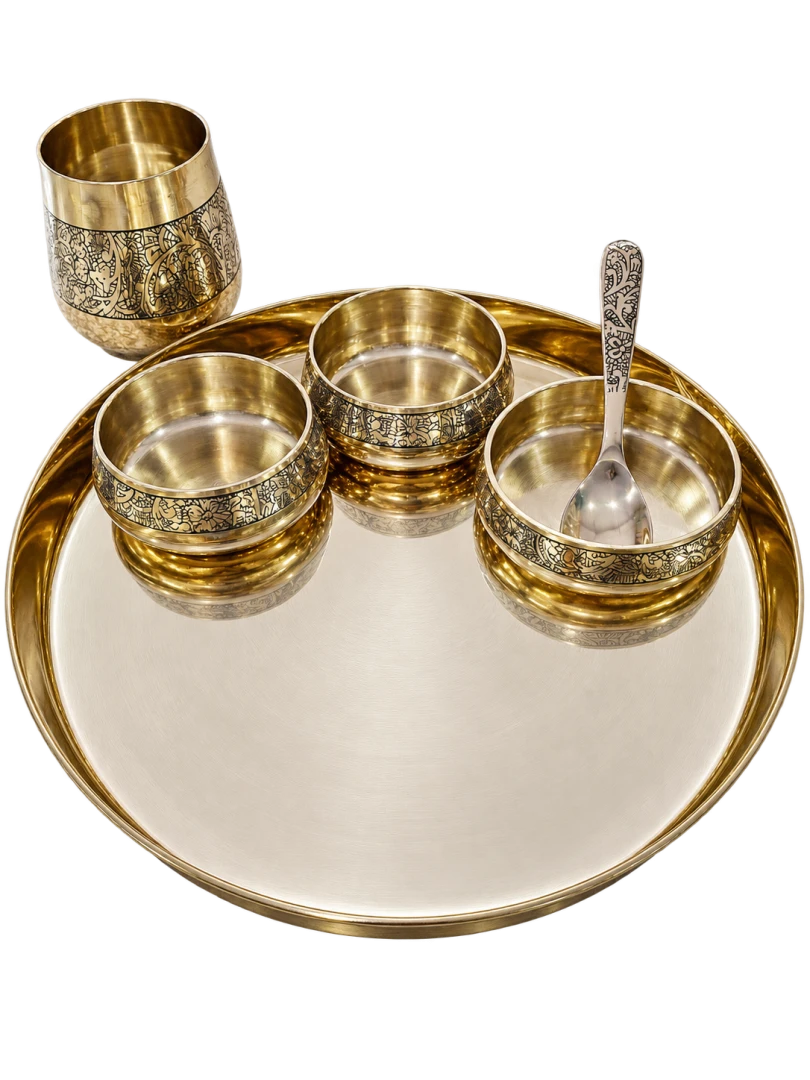
For generations, a proper Indian meal has meant a wide thali with small katoris arranged around it, and for a long time that thali was made of Kansa. The SPJ Kansa Thali Set brings that arrangement back in a 6-piece set: one thali, two katoris, a wide bowl for something sweet, a glass and a spoon. It is complete enough to serve a full daily meal, and finished well enough to bring out when guests are at the table.
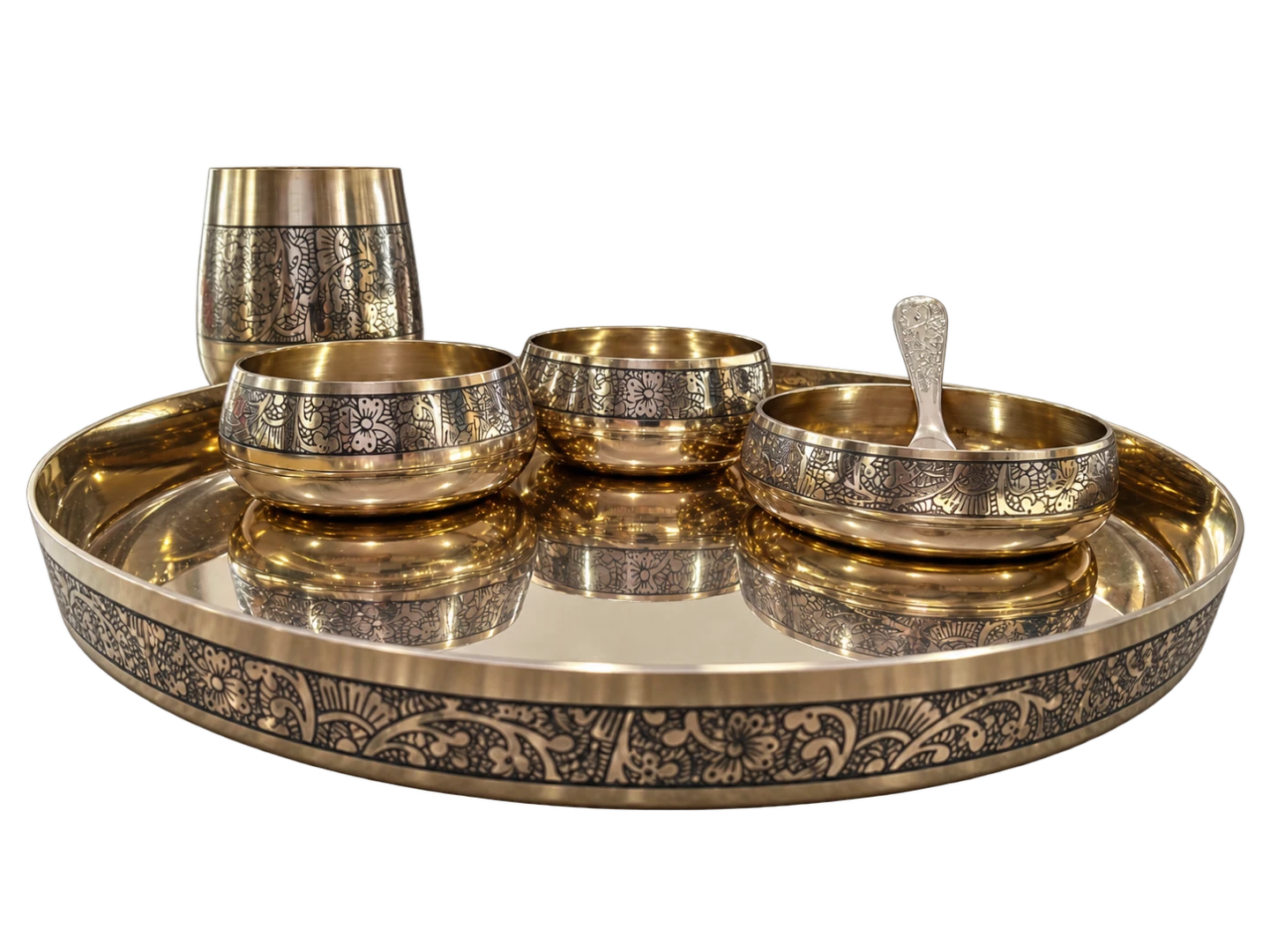
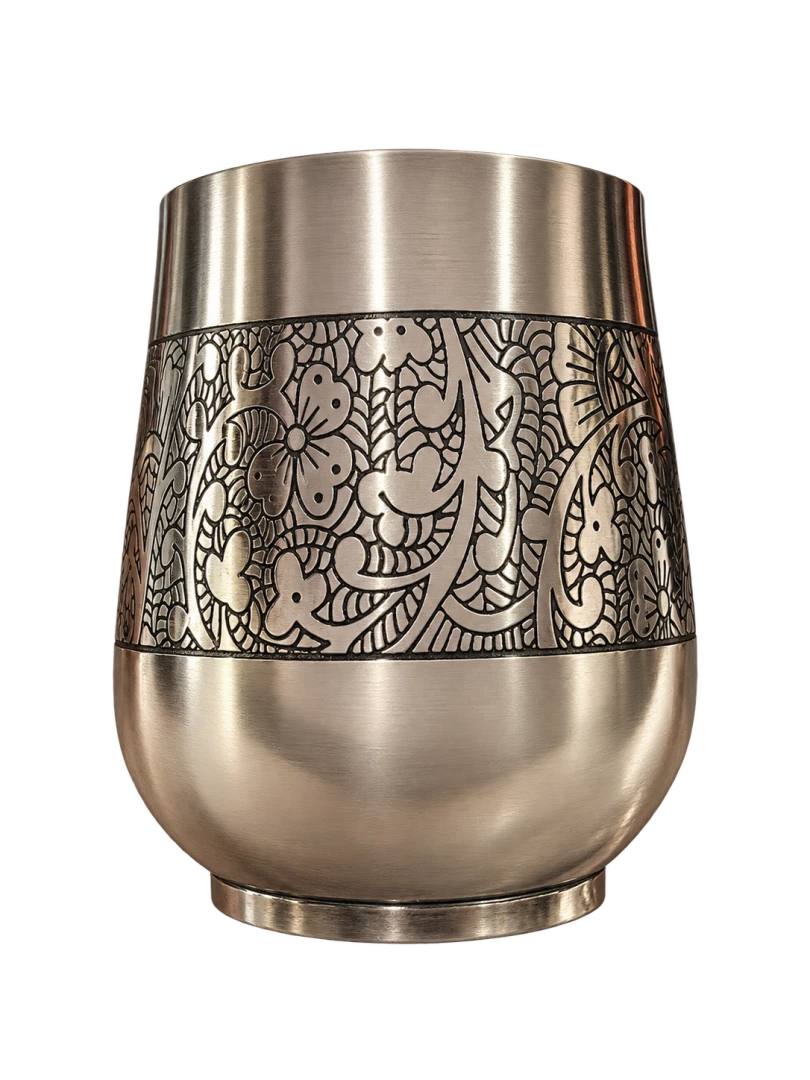
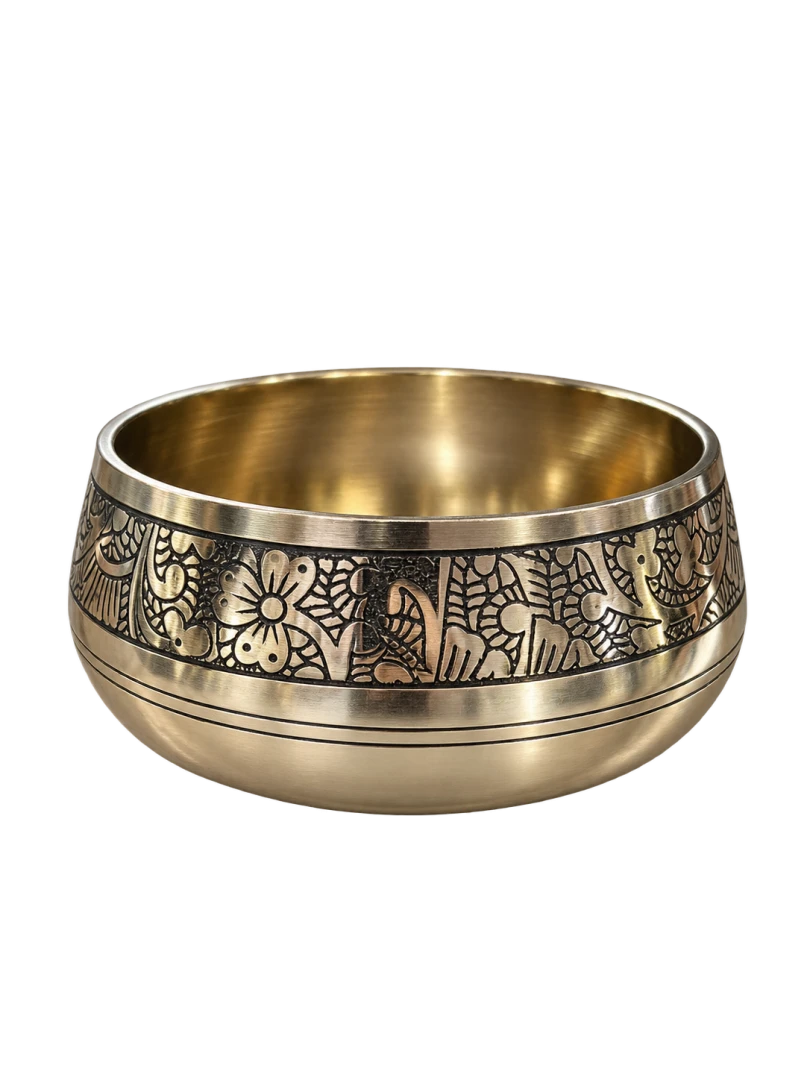
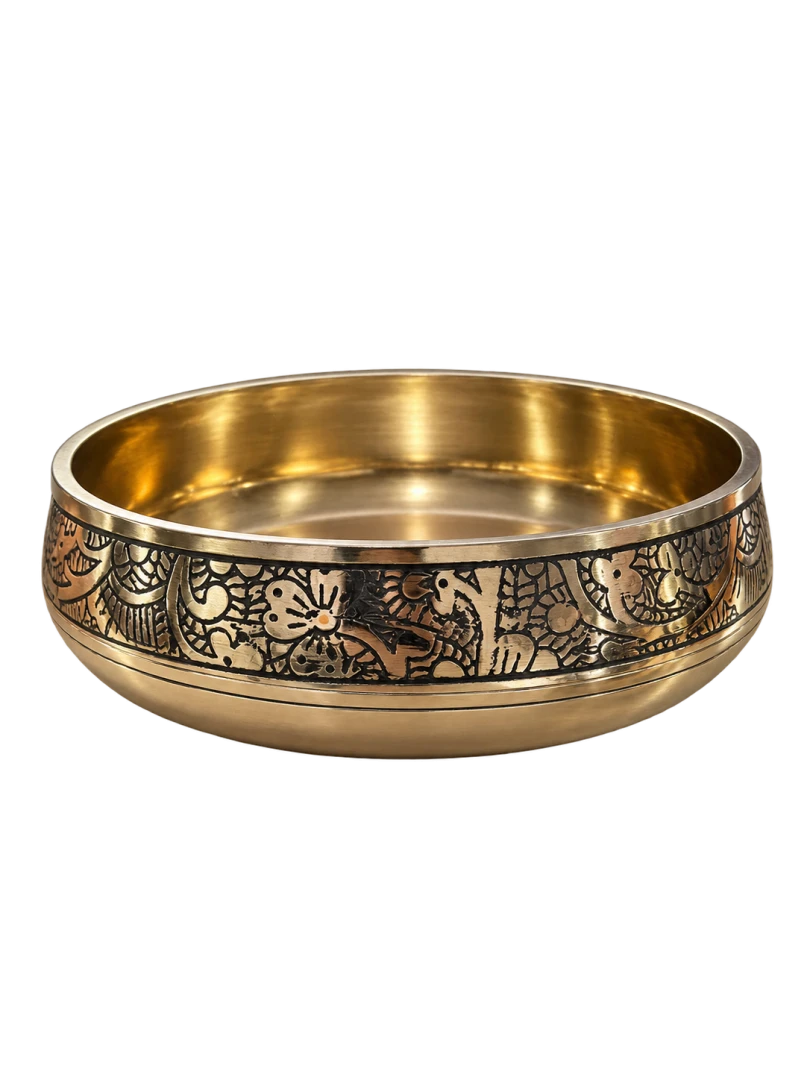
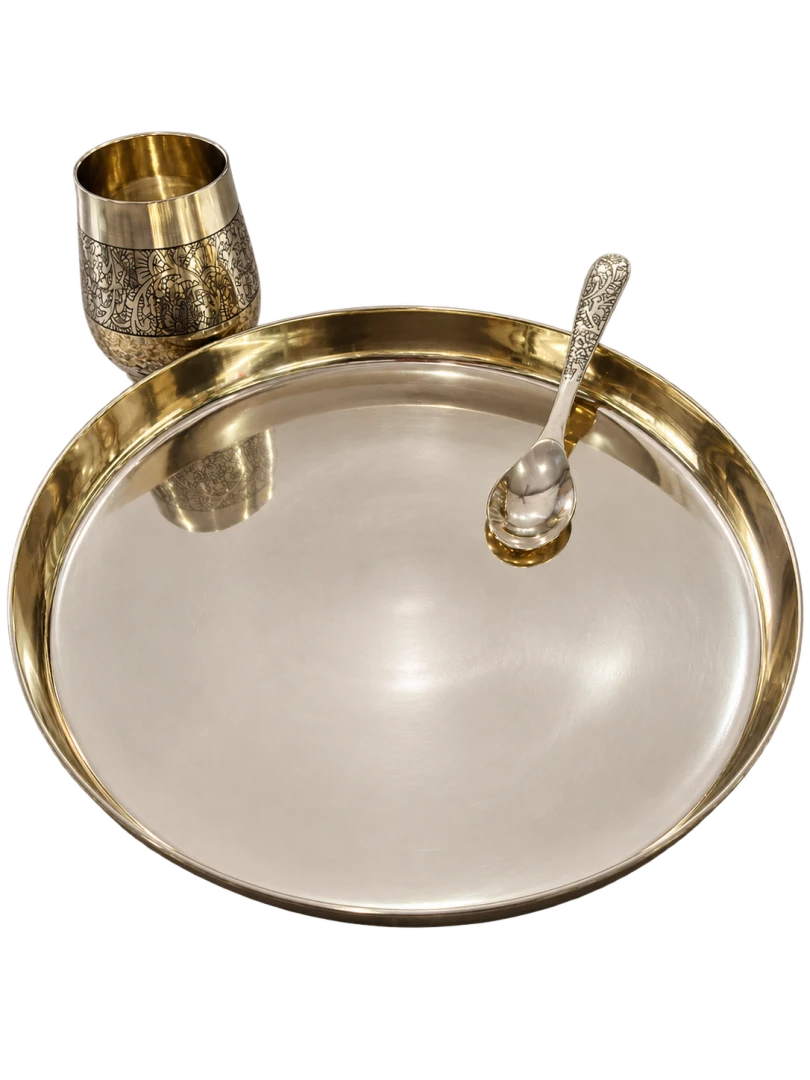
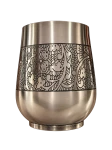
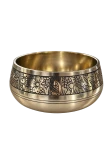
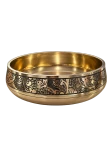
The glossy polish gives the metal a bright, gold-toned sheen that catches the light on a laid table. Around the outer wall of the thali runs a wide engraved band of floral and paisley motifs, with fine linework filled in dark so the pattern stands out against the metal. The same band wraps the katoris, the sweet bowl and the glass, and the spoon handle carries a matching engraving, so the six pieces read as one set. Inside, the thali is left plain and smooth: the meal sits on a clean surface, and the engraving frames it from the edge.
What is Kansa?
Kansa, also written kansya and known in English as bell metal, is an alloy of copper and tin. It is commonly described as roughly 78% copper and 22% tin. The higher tin content is what separates it from ordinary bronze: it gives the metal a hard, dense body and a clear ring when tapped, which is why the same alloy has been used for temple bells, ritual vessels and dining sets across India.
Kansa is worked by artisan communities in several parts of the country, and its use in Indian kitchens goes back many centuries. It is one of the few materials that has been part of both the everyday meal and the ceremonial one.
Why Kansa matters in Indian culture and serving
In traditional homes, eating from Kansa was not a show of wealth; it was simply how food was served, across many parts of India. Three ideas explain why it stayed important.
- Ayurvedic tradition. Ayurveda has long favoured metal vessels for eating, and Kansa is traditionally associated with balancing the doshas and supporting digestion. These are traditional beliefs and not medical claims, but they are the reason many families still prefer Kansa for the main meal.
- The way a thali is served. A Kansa thali holds the whole meal in one place: dal, sabzi, rice, roti, something sweet. The katoris keep each item separate, and the wide bowl gives halwa or kheer its own space.
- Occasions and ritual. Kansa plates and glasses appear at weddings, griha pravesh, festival lunches and pujas. Serving a guest on Kansa has always been a way of saying the occasion matters.
Eating from a set like this is also a small change in habit. The meal slows down a little. Everything is on one plate, in its own place, in front of you.
What is in the set
This 6-piece set is designed for one person's complete meal.
- 1 thali (dinner plate) with an engraved band on the outer wall and a plain inner surface
- 2 katoris (deep, rounded bowls) for dal and sabzi
- 1 wide, shallow bowl for sweets such as halwa or kheer, or for a dry sabzi
- 1 glass with an engraved band around the middle
- 1 spoon with an engraved handle
At a glance: Brand: SPJ Angel · Material: Kansa · Design: engraved borders, glossy finish · Type: thali set · Set size: 6 pcs.
Key features
- Glossy finish: a polished, bright surface that suits both everyday use and festive tables.
- Engraved floral and paisley border: repeated across the thali, katoris, sweet bowl, glass and spoon handle, so the set looks matched.
- Plain inner thali: the eating surface is smooth, with the engraving kept to the outer wall.
- Made from Kansa: the traditional copper and tin alloy used for Indian dining vessels.
- Complete 6-piece meal set: thali, two katoris, sweet bowl, glass and spoon, so nothing needs to be matched separately.
- For serving and eating: made for the table, not for the stove.
Everyday use and festive use
Many families keep a Kansa set for special days and then find it too good to leave in the cupboard. This one works either way. On weekdays it holds a plain dal, sabzi and roti. At Diwali, on Dhanteras, at a sagai or an anniversary lunch, the same set carries the sweets, the puri and the kheer, with the wide bowl doing the work of a dessert dish. If you are setting up a new home or updating an older dining set with something more traditional, six pieces is a practical starting point.
Care and usage
- Hand wash with mild dish soap and warm water, and dry each piece straight away with a soft cloth. A glossy finish shows fingerprints and water spots easily, so wiping dry keeps it bright.
- Use a soft brush or cloth around the engraved bands so food does not collect in the fine linework.
- Avoid steel scrubbers and harsh chemical cleaners; they scratch the gloss and dull the engraving.
- Use for serving and eating only. Do not cook on a flame, heat in a microwave, or store food in the vessels for long hours.
- Very sour or acidic food left standing (lemon, tamarind, pickle) can dull the finish, so wipe and wash soon after the meal.
- If the set darkens with time, which is natural for copper alloys, rub gently with a cut lemon and a little salt, or a tamarind paste, then rinse and dry well.
A Kansa thali set for weddings, housewarmings and corporate gifting
A Kansa thali set is one of the few gifts that suits almost every Indian occasion, because it is useful, traditional and lasting. The gold-toned polish and engraved border make it look complete straight out of the box, so it does not need much dressing up.
- Weddings: a well-suited gift for the couple, or for the families exchanging gifts around the ceremonies. It is something they will actually use at the table, not just store.
- Griha pravesh and housewarming: a Kansa set at the first meal in a new home follows a tradition many families still keep.
- Diwali and Dhanteras: metal utensils have long been part of Dhanteras purchases, and a full 6-piece set is a sensible choice.
- Anniversaries and milestone birthdays: a set that reflects culture and family meals rather than a generic gift.
- Corporate gifting: for festive gifts to clients, long-service recognition and milestone awards, it carries a cultural weight that most standard corporate gifts do not.
Ordering more than one set for a wedding or a corporate occasion? Get in touch with the GDSons team before you order.
Frequently Asked Questions
- What is included in the SPJ Kansa thali set of 6 pieces?
- The set is made for one person's full meal: 1 thali (dinner plate), 2 katoris (deep bowls), 1 wide shallow bowl for sweets, 1 glass and 1 spoon with an engraved handle.
- What is the engraved design on this set?
- A band of floral and paisley motifs with fine linework, filled in dark so it stands out against the gold-toned metal. It runs around the outer wall of the thali and around the katoris, sweet bowl and glass. The inside surface of the thali is plain and smooth, and the spoon handle carries a matching engraving.
- What is Kansa, and is it the same as bronze?
- Kansa, also called kansya or bell metal, is a copper and tin alloy, commonly described as roughly 78% copper and 22% tin. In everyday English it is often called bronze, but in India the name Kansa points to this specific traditional alloy used for dining vessels and temple bells.
- Can I eat everyday meals, including hot food, in this Kansa thali set?
- Yes. The set is meant for serving and eating dal, sabzi, rice, roti and sweets at the table. Kansa is the traditional metal for exactly this use.
- Can I cook or store food in Kansa utensils?
- No. Use these pieces for serving and eating only. Do not cook on a flame, heat them in a microwave, or store food in them for long hours.
- How do I clean the set and keep the glossy finish?
- Hand wash with mild dish soap and warm water, then dry each piece straight away with a soft cloth so water spots do not form on the gloss. Avoid steel scrubbers and harsh chemical cleaners, which can scratch the finish and dull the engraving.
- Why does Kansa darken over time, and how do I bring back the shine?
- Copper alloys darken naturally with air, moisture and food residue. Rub gently with a cut lemon and a little salt, or a paste of tamarind, then rinse and dry well. A soft cloth polish restores the gloss.
- Does Kansa have health benefits?
- Ayurvedic tradition holds Kansa vessels in high regard for eating and associates them with balancing the doshas and supporting digestion. These are traditional beliefs, not medical claims, and Kansa should not be treated as a substitute for medical advice.
- Is this Kansa thali set suitable for gifting at weddings and festivals?
- Yes. A Kansa thali set is a traditional choice for weddings, griha pravesh, Diwali, Dhanteras and anniversaries, and it also works as a corporate gift for milestones and festive occasions.
- Does GDSons deliver this set across India?
- Yes. GDSons is an authorised kitchenware dealer in Varanasi since 1970 and ships across India with home delivery.
More Glossy Finish Serving & Dinner Sets Products
-
Spj Kansa Thali Set Glossy Finish With Engraved Design 6 Pcs Set
Serving & Dinner Sets(33.52% off)Rs. 4,853.00Rs. 7,300.00