Triply Steel Pressure Cookers — Hawkins, Prestige, Bergner, Milton, Stahl & Borosil
33.12% OFF
33.94% OFF
44.85% OFF
38.91% OFF
31.18% OFF
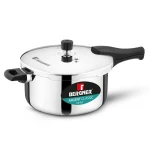
16.9% OFF
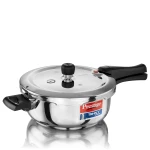
33.14% OFF
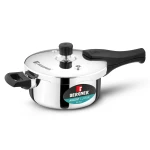
33.05% OFF
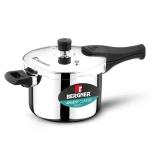
33.29% OFF
24.46% OFF

33.88% OFF

33.8% OFF

8.78% OFF

9.52% OFF

7.46% OFF

7.8% OFF

8.55% OFF

17.74% OFF

18.4% OFF

20.63% OFF

30.53% OFF

30.31% OFF

10.95% OFF

6.94% OFF

7.28% OFF

8.93% OFF

7.75% OFF



Triply Stainless Steel Pressure Cookers — Hawkins, Prestige, Bergner, Milton, Stahl and Borosil, 1 Litre to 6.5 Litres
Triply stainless steel has become one of the most sought-after materials for pressure cookers in Indian homes, and for good reason. It combines the even, efficient heating of aluminium with the strength, safety and easy upkeep of stainless steel in a single cooker body. This page brings together 30 triply pressure cookers available at GD Sons from six brands: Hawkins, Prestige, Bergner, Milton, Stahl and Borosil. Capacities run from 1 litre to 6.5 litres, in inner-lid and outer-lid designs and a wide range of body shapes. Every cooker on this page works on gas stoves and induction cooktops alike. Before getting into the brands and models, here is what triply actually means, and why it suits Indian cooking so well.
What Is Triply Steel?
Triply, also written tri-ply, means three layers. A triply pressure cooker is made from three sheets of metal bonded permanently together, then pressed and shaped into the cooker body.
The inner layer is food-grade stainless steel. This is the surface your food touches, and it is chosen because it does not react with food, does not stain easily and is simple to clean.
The middle layer is aluminium, sandwiched between the two steel layers. Aluminium is one of the best heat conductors used in cookware. Its job is to take the heat from the flame or induction surface and spread it quickly and evenly across the whole cooker.
The outer layer is magnetic stainless steel. It protects the aluminium core, gives the cooker a durable, easy-to-clean exterior, and, because it is magnetic, makes the cooker work on induction cooktops.
The three layers are bonded under heat and high pressure so that they behave as one sheet of metal. They cannot separate, and nothing comes between them. This method of bonding different metals together, known as cladding, was developed to combine metals that each do one job very well. It was first valued in professional kitchens before becoming common in home cookware.
Full-Body Triply vs a Sandwich Bottom
Many steel cookers have a "sandwich" or "capsule" bottom: a disc of aluminium attached to the base of an ordinary steel cooker. This improves heating at the base, but the walls of the cooker are still single-layer steel, so the heat stays concentrated at the bottom. In a true triply cooker, all three layers run through the base and up the walls of the cooker. Heat therefore travels up the sides as well as across the base, and food cooks more evenly throughout. It is the reason a triply cooker handles thick dals, gravies and rice so well. There is no sharp hot zone at the base and a cold zone higher up; the heat surrounds the food.
How Triply Compares with Other Pressure Cooker Materials
Triply vs aluminium. Plain aluminium cookers heat quickly and are light, which is why they have been used in Indian kitchens for generations. But aluminium is soft and dents easily, reacts with sour and acidic foods such as tomatoes, tamarind, lemon and curd, and turns dull, stained and pitted over time. Triply keeps aluminium's heating ability by placing it in the core, but seals it away behind stainless steel. Food only touches steel, the cooker does not react with what you cook, and it stays bright and intact for many years.
Triply vs single-layer stainless steel. A single-layer steel cooker is strong and non-reactive, but steel on its own is a poor conductor of heat. The heat stays where the flame touches the base, which leads to hot spots, sticking and scorching, especially with dal, khichdi and milk-based dishes. Triply solves this with its aluminium core, which spreads the heat evenly. You get all the benefits of a steel cooker without its biggest weakness.
Triply vs hard anodised. Hard anodised cookers are aluminium with a hardened, non-reactive surface, and they are excellent performers. The difference lies in the surface and the finish. A triply cooker has a stainless steel surface inside and out. It can be scrubbed more vigorously, it keeps a bright steel finish, it is generally safe with a wider range of cleaning methods, and it works on induction as standard. For households that want a steel cooker in the kitchen, triply offers the closest match to the heating performance of aluminium-based cookers.
Is Triply Safe?
Yes. In a triply cooker, the only metal that touches your food is food-grade stainless steel. The aluminium core is fully enclosed between two steel layers and never comes into contact with what you cook. There is no coating to wear off, peel or flake into food. Stainless steel does not react with acidic or alkaline ingredients, so sambar, rasam, tomato curries and tamarind-based dishes cook without any metallic taste and without affecting the cooker. For families who want to move away from plain aluminium cookers, triply is one of the safest choices available.
Why Triply Suits Indian Cooking
Indian pressure cooking asks a lot of a cooker. Dal must cook through without sticking, rice must not burn at the base, meat and rajma need long cooking, and many recipes begin with tempering spices and browning onions before the lid goes on. Triply handles all of this well. The even heat reduces sticking and scorching on the base. The steel surface takes high-heat tempering and bhuna without damage. And because the whole body heats evenly, many cooks find they get good results on a medium flame rather than high, which can also help save fuel. A triply cooker also holds heat after the flame is switched off, so food keeps cooking gently while the pressure settles.
Built to Last
A well-made triply cooker is one of the longest-lasting cookers you can buy. Stainless steel does not corrode, pit or discolour from food the way aluminium does. The bonded layers cannot separate. There is no coating to wear out. With the gasket and safety parts replaced from time to time, as with any pressure cooker, a triply cooker can serve a household for many years.
Caring for a Triply Pressure Cooker
Triply cookers are easy to look after. Wash with regular dishwashing liquid and a scrubber. Stainless steel can handle firmer scrubbing than coated cookware. Over time, you may see white spots inside, which come from minerals in hard water. A wipe with diluted vinegar or lemon juice removes them. A faint rainbow tint can sometimes appear on the steel after high-heat cooking. This is normal, harmless, and can be cleaned the same way. Avoid leaving salted water standing in the cooker for long periods, and dry it after washing to keep the finish at its best.
Induction, Gas and Every Other Cooktop
Every triply cooker on this page is induction compatible, because its outer layer is magnetic stainless steel. Being induction compatible does not limit where a cooker can be used. An induction-compatible cooker works on a regular gas stove exactly as well as any other cooker, and also works on electric coil cooktops, ceramic and infrared cooktops, and hot plates. Choosing an induction-compatible cooker therefore never narrows your options. It simply means the cooker will keep working if you add an induction cooktop or move to a home that uses one.
Inner Lid vs Outer Lid in Triply Cookers
The triply cookers on this page come in two lid designs, and the choice is mostly about how you like to cook.
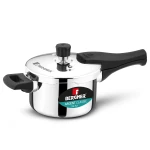
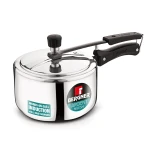
An inner lid is the traditional Indian pressure cooker design. The oval lid is tilted, passed through the mouth of the cooker, and lifted to seal against the rim from the inside. Once pressure builds, it pushes the lid more firmly against the rim, so the seal tightens with pressure and the lid cannot be opened while the cooker is pressurised. Inner-lid triply cookers on this page come from Hawkins, Bergner (Argent Nilesh), Milton and Borosil.
An outer lid sits on top of the cooker body and locks onto the rim from the outside. The mouth of the cooker stays as wide as the body, which makes stirring, adding ingredients, serving and cleaning easier, and opening and closing simpler for beginners. Outer-lid triply cookers on this page come from Bergner (Argent Classic), Prestige and Stahl.
Hawkins Triply Pressure Cookers — Five Distinct Shapes
Hawkins offers the widest variety of triply cooker shapes on this page, all with the Hawkins inner lid. Each shape suits a different style of cooking.
The Hawkins Triply Steel standard range comes in 1.5 litre, 2.5 litre, 3.5 litre and 4.5 litre. It covers