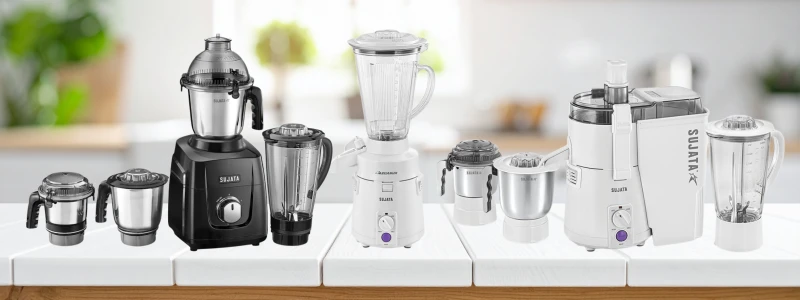
Sujata Mixer Grinders: Built for the Indian Kitchen
Why millions of Indian households trust Sujata — and why that trust is well-earned.
Why Sujata Stands Apart in the Indian Market
Walk into any middle-class Indian household that has been cooking since the 1990s, and there is a good chance you will find a Sujata mixer grinder sitting on the counter — not because it was gifted, not because of a sale, but because it earned its place through decades of dependable performance.
Sujata Electricals, founded in 1978 in Delhi, is one of India's oldest domestic appliance manufacturers. Unlike brands that license technology or rely on imported components, Sujata designs and manufactures its motors in-house. This is not a minor detail — it is the foundation of everything that distinguishes a Sujata from the competition.
India's cooking demands are unlike any other cuisine in the world. We grind fresh coconut, soak and blend rice-dal batters for hours, crush whole spices with fibrous husks, and expect the machine to do all of this reliably — every single day, sometimes twice a day. Most brands build mixer grinders for the global mass market and then sell them in India. Sujata builds for India first, and that difference shows up in every aspect of their engineering.
The Technology Inside Every Sujata
What separates a Sujata from most competitors is not visible to the eye. It lives inside the motor housing — in the copper windings, the ball bearings, and the thermal protection circuitry that most brands never bother with.
Copper-Wound Motor
Pure copper windings provide superior electrical conductivity and heat resistance. Cheaper aluminium-wound motors, common in budget brands, overheat faster and burn out sooner — especially in India's climate.
Continuous Duty Rating
Sujata's flagship models can run continuously for up to 60 minutes before requiring a break. Competing brands typically overheat after 10–15 minutes of grinding. This matters enormously for dosa batter.
Thermal Overload Protection
An automatic cutoff trips the motor before it overheats, protecting both the motor and the operator. The machine restarts once it cools — no permanent damage, no burned-out coils.
Ball-Bearing Construction
Sealed ball bearings at both ends of the motor shaft reduce friction and ensure the motor runs true even under heavy loads. Many budget mixers use plain bushings, which wear out and cause wobble.
Hardened Stainless Blades
All cutting blades are made from food-grade stainless steel, hardened to retain their edge over years of grinding hard spices, frozen foods, and fibrous ingredients.
Anti-Leak Jar Seals
Sujata's thick-gauge stainless steel jars seal tightly at the blade assembly. The neoprene gasket ensures no liquid seeps around the blade shaft — a common failure point in cheaper mixers.
34.8% OFF
32.15% OFF
Designed for the Real Indian Kitchen
Indian cooking is deeply demanding on kitchen appliances. A mixer grinder in an Indian home is not a once-a-week convenience gadget — it is used one to three times daily, grinding everything from fresh coconut and hard coriander seeds to soft tomatoes and ginger-garlic paste.
Wet Coconut
Fresh grated coconut for South Indian chutneys and curries
Dosa Batter
Soaked rice and dal ground to a silky, fermentable consistency
Hard Spices
Cloves, cardamom, black pepper, dried red chillies
Ginger-Garlic
Fresh pastes ground daily for curries and marinades
Tomato Puree
Smooth purees without the rubbery seeds of cheap blenders
The Voltage Fluctuation Problem — Solved
India's power supply is notoriously inconsistent. Voltage fluctuations between 180V and 250V are common, especially in smaller towns and rural areas. Most imported brands or mass-market mixers are designed for stable 230V–240V environments. When voltage drops, their motors labour, overheat, and eventually fail. Sujata's motors are wound and calibrated specifically for Indian grid conditions — they handle the dips and surges without complaint.
The Warranty That Actually Means Something
Sujata offers a 5-year warranty on the motor — not just a 1-year product warranty as offered by most competitors. This is a statement of engineering confidence. A brand that offers a 5-year motor warranty has built that machine to last at least that long. In practice, Sujata motors in regular Indian households regularly run for 15 to 20 years before requiring service.
After-Sales Service Across India
Sujata has an authorised service network across major Indian cities and towns. Their spare parts — including jars, blades, gaskets, and couplers — are widely available and reasonably priced. This matters more than most buyers realise at the time of purchase. Many imported brands or newer players have poor service infrastructure, meaning a single repair requires mailing the machine to a service centre in a major city and waiting weeks.
28.27% OFF
34.06% OFF
Sujata for Commercial Kitchens
From dhabas and tiffin services to hotel kitchens and catering operations, Sujata's heavy-duty models have been earning their place in professional settings for decades. Here is why they work where others fail.
Restaurant & Hotel Kitchens
Commercial kitchens grind masala pastes, chutneys, and batters in volumes that would burn out a domestic mixer in weeks. Sujata's continuous-duty-rated motors handle multi-hour daily operation without thermal failure. The overload protection system means accidental overloading does not destroy the machine — it simply trips and resets.
Tiffin & Catering Services
Tiffin operators typically produce 50 to 200 meals per day. The ability to run a Sujata for a full grinding session — dosa batter, sambar masala, chutney — without a cool-down break between each is a critical operational advantage. Competing brands require 15-minute intervals that slow down morning prep.
Chai Stalls & Juice Bars
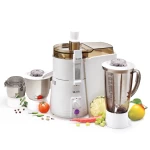
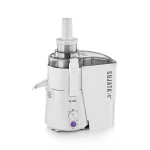
The Sujata Dynamix's combination juicer-mixer format is particularly popular in small commercial setups where counter space is limited. The juicer's commercial-grade yield extraction and the mixer's grinding power make it a two-in-one solution that reduces equipment cost and clutter.
Institutional Kitchens
School and college canteens, hospital dietary kitchens, and ashram langar operations all benefit from Sujata's rugged build. These environments demand consistent performance without the luxury of scheduled maintenance. Sujata's minimal moving parts design — compared to belt-driven wet grinders — reduces mechanical failure points significantly.
Commercial Recommendation
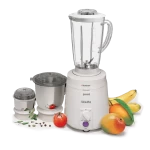
For commercial operators, the Sujata Supermix 900W is the go-to recommendation. Its wide-mouthed jar, high-torque motor calibration, and shock-proof housing are specifically suited to the rougher handling and longer operating cycles of professional kitchens. Pair it with a second Powermatic Plus for high-volume operations, and you have a commercial grinding setup that will outlast most purpose-built commercial mixers at a fraction of the price.
For larger commercial operations requiring industrial-grade performance, Sujata's commercial-range models (available through authorised dealers like GD Sons) offer even higher continuous duty ratings with reinforced motor housings and commercial-grade jar sets.
33.54% OFF
32.12% OFF
Philips 1000W Mixer Grinder — A Good Alternative?
Philips needs no introduction in Indian kitchens. The brand's mixer grinder range, particularly the HL7756/00 and the Viva Collection 1000W models, are among the top-selling mixer grinders on Indian e-commerce platforms. Here is an honest assessment of where the Philips 1000W excels — and where Sujata still holds the edge.
When to choose Philips 1000W: If aesthetics and counter presence matter to you — perhaps in a modern modular kitchen — and your grinding needs are moderate (no large-batch batter grinding, occasional fresh masalas), the Philips 1000W is a well-engineered, reliable product. Its contemporary design, quieter operation, and the global brand reassurance make it a perfectly valid choice. The Philips HL7756/00 in particular has received consistently strong user reviews for build quality and ease of cleaning.
The Bottom Line on Philips
Philips 1000W is a good mixer grinder. Sujata 900W, however, is a great mixer grinder for Indian cooking specifically. The higher wattage in the Philips spec does not translate to superior Indian-cooking performance when the Sujata's motor is designed for longer, harder, more continuous grinding. If you are buying for a modern kitchen where the appliance is used 2–3 times a week for quick grinding tasks, Philips is an excellent buy. If you cook Indian food seriously — daily batter grinding, whole spice masalas, fibrous vegetables — Sujata is the better long-term investment.
20.01% OFF
14.4% OFF
Our Verdict
Sujata is not the flashiest brand on the shelf. It does not come with app connectivity, a brushed chrome finish, or a celebrity endorsement. What it comes with is a motor that will grind your masala every single morning for the next fifteen years — and that is exactly what an Indian kitchen needs.
For households that cook Indian food seriously, for joint families with high grinding demands, for commercial operations that cannot afford downtime — Sujata is the answer. For buyers who prioritise aesthetics or have lighter grinding needs, the Philips 1000W is a worthy alternative that deserves its popularity.
30.53% OFF
32.44% OFF