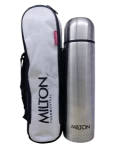
10 Essential Kitchen Tips for Monsoon Season
Keep Your Cookware, Food & Kitchen Safe
The monsoon season is finally here — and while the rains bring welcome relief from the summer heat, they bring a completely different set of challenges to your kitchen. Varanasi and most of North India experience humidity levels between 80% and 95% from June to September. This extreme moisture silently damages your cookware, spoils your stored food, clogs your chimney, and shortens the life of your kitchen appliances.
At Girdhar Das & Sons, Varanasi, we have been advising families on kitchen care for over 55 years. Every monsoon, we see the same problems — rusted cast iron pans, swollen gaskets, mould in spice jars, and mixer grinder motors that short-circuit because of dampness. Almost all of it is preventable.
This guide covers 10 essential tips to protect your entire kitchen — your cookware, your food storage, your appliances, and everything in between — so your kitchen stays safe, hygienic, and fully functional through the rainy season.
Read through each section carefully. Every tip is practical, specific, and actionable — and each links to the right products from our store so you can easily upgrade or replace what needs attention this season.
Dry Your Non-Stick & Hard Anodised Cookware Completely Before Storing
Non-stick and hard anodised cookware are the workhorses of every Indian kitchen — but they are also the most vulnerable during monsoon. When humidity is high, even a slightly damp pan stored in a closed cabinet can develop white water spots, weakened coating, and in worst cases, early rusting around the edges and rivets.
What Goes Wrong in Monsoon
- Moisture trapped between stacked pans slowly degrades the non-stick coating
- Hard anodised surfaces develop white mineral deposits from humid air
- Rivets and handles begin to loosen when moisture seeps into joints
- Odours develop when pans are stored damp in closed shelves
What To Do
- Always dry completely — after washing, heat the pan on a low flame for 30 seconds to evaporate all residual moisture before storing
- Never stack directly — place a dry cotton cloth or folded newspaper between stacked pans to prevent moisture transfer and coating scratches
- Store in open shelves where possible during monsoon — closed cabinets trap humidity
- For hard anodised pans — never use steel scrubbers or harsh detergents even in monsoon. Use a soft sponge only, and dry immediately
- Wipe the outside of the pan dry too — the base and handle joints are where rust starts
Good news: If your non-stick or hard anodised cookware is already showing signs of wear — flaking coating, uneven heating, or stubborn stains that won't come off — monsoon is a good time to replace it. A fresh, good-quality pan makes cooking easier and safer.
13.6% OFF
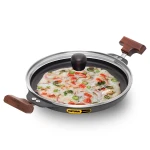
13.37% OFF
-09-26-48-643502.webp "Futura Dosa Tava Nonstick 28CM IB INDT28")
Cast Iron Cookware Needs Special Monsoon Care — Oil It Every Single Time
Cast iron is the most prized material in Indian cookware — nothing beats a cast iron kadhai for deep frying or a cast iron tava for rotis. But cast iron has one serious weakness: it rusts extremely fast in humidity. During Varanasi's monsoon months, an unseasoned or damp cast iron pan can show orange rust patches within 24 hours of being washed and left to dry naturally.
The Monsoon Cast Iron Rule: Wash → Dry on Flame → Oil → Store
- Never air dry cast iron — always place it on a low flame for 1–2 minutes after washing to drive off every trace of moisture
- Apply a thin layer of oil — while still warm, rub a few drops of any cooking oil (coconut, mustard, or refined) across the entire surface including the outside and handle using a paper towel
- Store in a dry place — ideally with a silica gel sachet nearby to absorb ambient moisture
- Never store with the lid on in monsoon — this traps moisture inside
- If rust does appear — scrub with coarse salt and a potato, rinse, dry on flame, and re-season with oil. It is completely recoverable
Re-Seasoning Your Cast Iron in Monsoon
If your cast iron has been neglected and shows rust patches, do a full re-seasoning: scrub clean, dry on high flame until smoke stops, rub generously with oil, and bake in an oven (or heat on low flame for 15 minutes). This restores the protective layer and makes it non-stick again.
Cast iron cookware, properly maintained, lasts decades and only gets better with use. These monsoon weeks are when that care really counts.
16.97% OFF
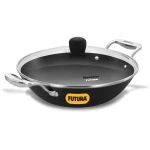
15.38% OFF

Switch All Dry Food Storage to Airtight Containers Right Now
This is the single most impactful monsoon kitchen upgrade you can make. In high humidity, every open or loosely sealed storage container becomes a moisture trap — and that moisture destroys your dry ingredients faster than anything else.
What Happens Without Airtight Storage in Monsoon
- Atta and besan — clump and develop a sour smell within days
- Rice and dal — attract insects and weevils, and absorb moisture making them cook unevenly
- Spices (haldi, mirchi, dhaniya) — clump into hard blocks, lose potency, and can grow mould
- Salt and sugar — become rock-hard lumps in open containers
- Biscuits and dry snacks — go soft and stale within hours of opening
The Right Way to Store in Monsoon
- Transfer everything from original paper and plastic packaging into airtight containers — the moment you bring groceries home
- Steel or glass containers are better than plastic in monsoon — they do not absorb moisture or odours, and don't crack under temperature changes
- Label and date every container so you use older stock first
- Lightly roast spice powders before storing to drive off residual moisture — this extends shelf life significantly
- Place a few dry bay leaves (tejpatta) in rice and dal containers to repel insects naturally
- Never use a wet spoon to scoop from any dry container — moisture introduced this way causes rapid spoilage
At GD Sons we stock a full range of airtight containers from Milton, Asian, and CELLO — in plastic, thermoware, and thermosteel — to cover every storage need in your kitchen this monsoon.
33.68% OFF

20.08% OFF

Check & Replace Your Pressure Cooker Gasket Before Monsoon Gets Worse
Your pressure cooker's rubber gasket is its most important safety component — and it is also the part most affected by monsoon humidity. Rubber gaskets absorb moisture, which causes them to swell, lose elasticity, and form tiny cracks. In high humidity, a gasket that was perfectly fine in May can become unsafe by July.
Signs Your Gasket Needs Replacing
- Steam escaping from the sides of the lid while cooking
- Cooker taking longer than usual to build pressure
- Whistle not working consistently
- Visible cracks, stiffness, or deformation in the rubber ring
- A persistent musty smell from the gasket even after washing
Monsoon Gasket Care Rules
- Remove the gasket from the lid after every use and wash and dry it separately — never leave it in the grooved lid where moisture gets trapped
- Dry completely before placing it back — trapped moisture under the gasket shortens its life dramatically in monsoon
- Store the cooker with the lid inverted (upside down on the body, not sealed) so air can circulate and moisture doesn't collect
- Replace every 12–18 months as a rule — and sooner if you notice any of the warning signs above
- Check the vent tube (the small nozzle on the lid) before every use — humidity-related residue can block it, which is a safety hazard
Genuine replacement gaskets, safety valves, and vent weights for all Hawkins pressure cooker models are available at our store and online at gdsons.co.in. Always use genuine manufacturer parts — duplicate gaskets may not seal properly and are a safety risk.

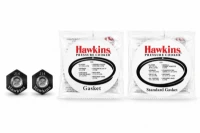
Accessories & Spares
Rs. 145
Hawkins 2 Safety Valve, Small Gasket & Big Gasket Combo - Genuine Pressure Cooker Parts
Rs. 145
Rs. 145
Pack Monsoon-Safe Tiffins for School & Office — Food Spoils Faster Now
June marks both the start of monsoon and the reopening of schools across Uttar Pradesh. These two facts together create a serious food safety concern: food packed in regular tiffins can become unsafe to eat in as little as 2–3 hours during peak monsoon humidity, compared to 5–6 hours in winter.
Bacteria multiply rapidly between 30°C and 40°C — which is exactly the temperature range inside a school bag or an office drawer during Varanasi's monsoon days.
What to Avoid Packing in Monsoon
- Curd, raita, and curd-based gravies — these turn sour very fast
- Cut fruits — oxidise and become breeding grounds for bacteria
- Dishes with coconut milk or coconut chutney
- Rice dishes left at room temperature for more than 2 hours
What Works Best
- Dry sabzis — aloo sabzi, gobhi, mixed vegetables stay safer longer than gravies
- Rotis and parathas — pack separately from wet dishes
- Dal and rice — only in insulated tiffins that maintain temperature
Why Insulated Tiffins Make All the Difference
A good vacuum-insulated steel tiffin keeps food at safe serving temperature (above 60°C) for 4–6 hours — well beyond the typical school or office lunch window. This is not a luxury in monsoon; it is a genuine food safety investment for your family.
We stock a full range of insulated school tiffins, vacuum steel tiffins, and office lunchboxes from Milton, BOROSIL, DUBBLIN, Nayasa, PEXPO, and Breeze — at every price point.
18.18% OFF

20% OFF

Choose the Right Water Bottle — Waterborne Infections Peak in Monsoon
Waterborne infections — typhoid, cholera, gastroenteritis — are most common during the monsoon season across India. While boiling or filtering water is the most important step, the container you store and carry your water in matters more than most people realise.
Why Plastic Bottles Are Risky in Monsoon
- Plastic bottles develop microscopic scratches over time that harbour bacteria — and bacteria multiply much faster in monsoon humidity
- Warm, humid conditions accelerate the leaching of chemicals from low-quality plastic
- Plastic absorbs odours and is harder to clean thoroughly — especially in the cap and seal area
Better Choices for Monsoon
- Stainless Steel Thermosteel Bottles — completely non-reactive, easy to clean, keeps water cool in humid heat, and the sealed design prevents contamination. Milton and PEXPO offer excellent options
- Borosilicate Glass Bottles — the most hygienic option; glass does not absorb any bacteria or odours and is easy to check for cleanliness. BOROSIL glass bottles are made from food-grade borosilicate
- Copper Bottles — copper has natural antimicrobial properties that are especially valuable during monsoon. Store water in a copper bottle overnight and drink it in the morning for maximum benefit
Cleaning Your Water Bottle in Monsoon
In monsoon, clean your water bottle every single day — not every few days. Use a bottle brush to reach inside, clean the cap thread and seal carefully, and let it air dry completely before refilling. A bottle left with residual moisture in a closed cap is a bacterial breeding ground during these months.
18.04% OFF

25.18% OFF

Clean Your Kitchen Chimney Filter — Monsoon Makes Grease Build Up Faster
Most people clean their kitchen chimney filter once in 3–4 months. During monsoon, that schedule needs to change. High humidity makes cooking vapours heavier and stickier — the grease, steam, and smoke from your daily cooking clings to chimney filters much more aggressively in humid air.
Why Chimney Care Is Critical in Monsoon
- A clogged filter in humid conditions becomes a fire hazard — grease-saturated filters near a gas flame are dangerous
- A blocked chimney cannot pull out cooking fumes effectively, meaning smoke and moisture stay in your kitchen — increasing humidity further and accelerating damage to your appliances and cabinets
- Moisture trapped in a dirty filter can cause motor damage over time
- Unpleasant odours develop when old grease in the filter gets mixed with humid air
Monsoon Chimney Maintenance Schedule
- Mesh / cassette filters — clean every 3–4 weeks during monsoon (vs. every 2–3 months normally). Soak in hot water with dish soap for 30 minutes, scrub gently, rinse, and dry completely before reinstalling
- Baffle filters — these are easier to clean; wipe with a damp cloth weekly and deep clean monthly
- Motor vent — check for moisture buildup around the motor housing; wipe dry with a cloth if you see condensation
- Oil collector cup — empty and clean every 2 weeks instead of monthly in monsoon
If your chimney is more than 3–4 years old and struggling with efficiency, monsoon is actually the worst time to be running an underperforming chimney — and the best time to consider an upgrade. We stock SUNFLAME, HINDWARE, and Sujata chimneys in 60 cm and 90 cm sizes at our Varanasi store.
38.49% OFF

41.03% OFF

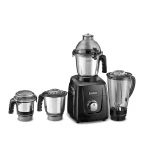
Protect Your Mixer Grinder, Kettle & Electric Appliances From Humidity
Electric kitchen appliances are the most expensive items in your kitchen — and they are also the ones most silently damaged by monsoon humidity. Moisture that seeps into motors, heating coils, and circuit boards does not show damage immediately — it shows up as a sudden short circuit or a motor that burns out, usually at the worst possible time.
Universal Rules for All Electric Appliances in Monsoon
- Always unplug when not in use — do not leave appliances plugged in overnight or when you leave the kitchen, as voltage fluctuations combined with humidity are a common cause of appliance damage
- Never place near open windows or kitchen ventilation gaps through which monsoon rain and wind can enter
- Wipe down the exterior with a dry cloth every few days — especially the base and around buttons where moisture collects
- Use a voltage stabiliser — monsoon brings frequent voltage fluctuations in Varanasi and most of UP, which damage appliance motors over time
Appliance-Specific Tips
Mixer Grinder: Always ensure jars are bone dry before attaching to the base — water dripping down into the motor shaft is the most common cause of mixer grinder damage in monsoon. After washing jars, air dry them upside down or wipe dry with a cloth. Store jars off the grinder base when not in use.
Electric Kettle: Always empty the kettle after use — never leave water sitting in the kettle between uses in monsoon. Mineral deposits build up faster in humid conditions. Descale monthly with a vinegar-water solution.
Air Fryer: The mesh basket and drawer collect steam and cooking moisture. In monsoon, dry the basket completely after washing before storing — never store with any moisture inside a closed unit.
Sandwich Maker / Toaster: These have heating plates that can accumulate moisture if stored in humid conditions. Store upright or vertically when possible to prevent moisture pooling on the plates.
31.71% OFF
20.01% OFF

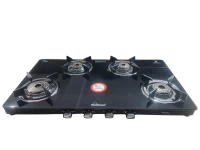
Your Gas Stove Needs Monsoon Attention Too — Burners & Glass Top Care
Most people clean their gas stove regularly but forget about monsoon-specific care. Humidity affects your gas stove in ways that aren't immediately obvious — burner ports get clogged with moisture and food residue, ignition systems fail in humid conditions, and glass tops develop stubborn stains that are harder to remove the longer they sit.
Burner Care in Monsoon
- Clean burner caps weekly during monsoon — soak in hot soapy water, use a pin or toothpick to clear all the small holes, and dry completely before replacing. Blocked holes mean uneven flame and wasted gas
- Check for rust around the burner base — wipe the metal parts around burners with a dry cloth after every cooking session
- Auto-ignition models — humidity affects the spark mechanism. If clicking is weak, dry the spark electrode area with a dry cloth. Never use water near the ignition area
Glass Top Gas Stove Care
- In monsoon, clean spills immediately — acidic food spills (tomato, tamarind) etch glass surfaces faster in humid heat
- Use a glass cooktop cleaner or baking soda paste for weekly deep cleaning — avoid abrasive scrubbers that scratch the surface
- Dry the glass top completely after cleaning — water droplets left on glass in humid conditions can leave permanent mineral marks
LPG Connection Check
Monsoon is also the right time to check your LPG rubber pipe for cracks or brittleness — rubber degrades faster in sustained heat and humidity. If your gas pipe is more than 2 years old, have it checked or replaced. A gas leak during monsoon, when windows are closed and ventilation is limited, is significantly more dangerous.
37.15% OFF

41.63% OFF
Your Complete Monsoon Kitchen Checklist — Is Your Kitchen Ready?
Use this checklist at the start of every monsoon season to make sure your kitchen is fully prepared. Go through each item — anything you haven't done yet, do it this week.
✅ Cookware Checklist
- ☐ Dry all non-stick and hard anodised pans completely before storing
- ☐ Place cloth separators between stacked pans
- ☐ Oil all cast iron pans after every wash and store without lid
- ☐ Check for any rust patches on cast iron — re-season if needed
- ☐ Inspect stainless steel and triply pans for water spots — clean with mild descaler
✅ Pressure Cooker Checklist
- ☐ Remove and dry the gasket separately after every use
- ☐ Check gasket for cracks, stiffness, or swelling — replace if any doubt
- ☐ Clean the vent tube/nozzle with a pin before every use
- ☐ Store cooker with lid inverted, not sealed shut
✅ Food Storage Checklist
- ☐ Transfer all atta, rice, dal, and spices into airtight containers
- ☐ Remove all food from original paper or loose plastic packaging
- ☐ Place bay leaves in rice and dal containers
- ☐ Lightly roast spice powders before storing
- ☐ Label and date all containers
✅ Tiffin & Water Bottle Checklist
- ☐ Switch children's and office tiffins to vacuum-insulated steel models
- ☐ Avoid packing curd, cut fruit, or coconut-based dishes
- ☐ Switch to steel thermosteel or glass water bottles
- ☐ Clean water bottles every single day in monsoon
✅ Appliance Checklist
- ☐ Unplug all electric appliances when not in use
- ☐ Move appliances away from windows and ventilation gaps
- ☐ Ensure mixer grinder jars are completely dry before use
- ☐ Empty electric kettle after every use and descale monthly
- ☐ Check voltage stabiliser is working
✅ Chimney & Gas Stove Checklist
- ☐ Clean chimney filter — monthly minimum during monsoon
- ☐ Empty chimney oil collector cup
- ☐ Clean gas burner caps and clear all port holes
- ☐ Check LPG rubber pipe for cracks or brittleness
- ☐ Wipe glass cooktop dry after every cleaning
Shop Monsoon-Ready Kitchen Essentials at GD Sons
Everything on this checklist — gaskets, airtight containers, insulated tiffins, steel water bottles, cookware, chimneys, and appliances — is available at Girdhar Das & Sons, Varanasi. Shop online at gdsons.co.in with home delivery across India, or visit us in-store at W.H. Smith School Road, Sigra, Varanasi.
WhatsApp us at +91 99350 70000 if you need help choosing the right product for your kitchen this monsoon — our team replies fast.
Stay safe, cook well, and enjoy the rains.
52.12% OFF

18.02% OFF