
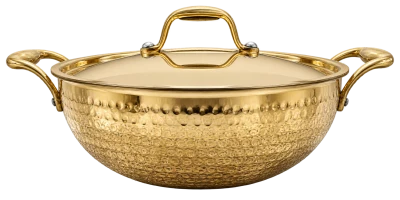
| Weight of Kadhai (Without Lid) | 950 gm |
| Weight of Kadhai (With Lid) | 1.17 Kg |
| Capacity | approx 1.5 Ltr |
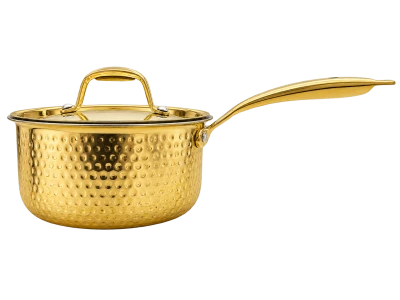
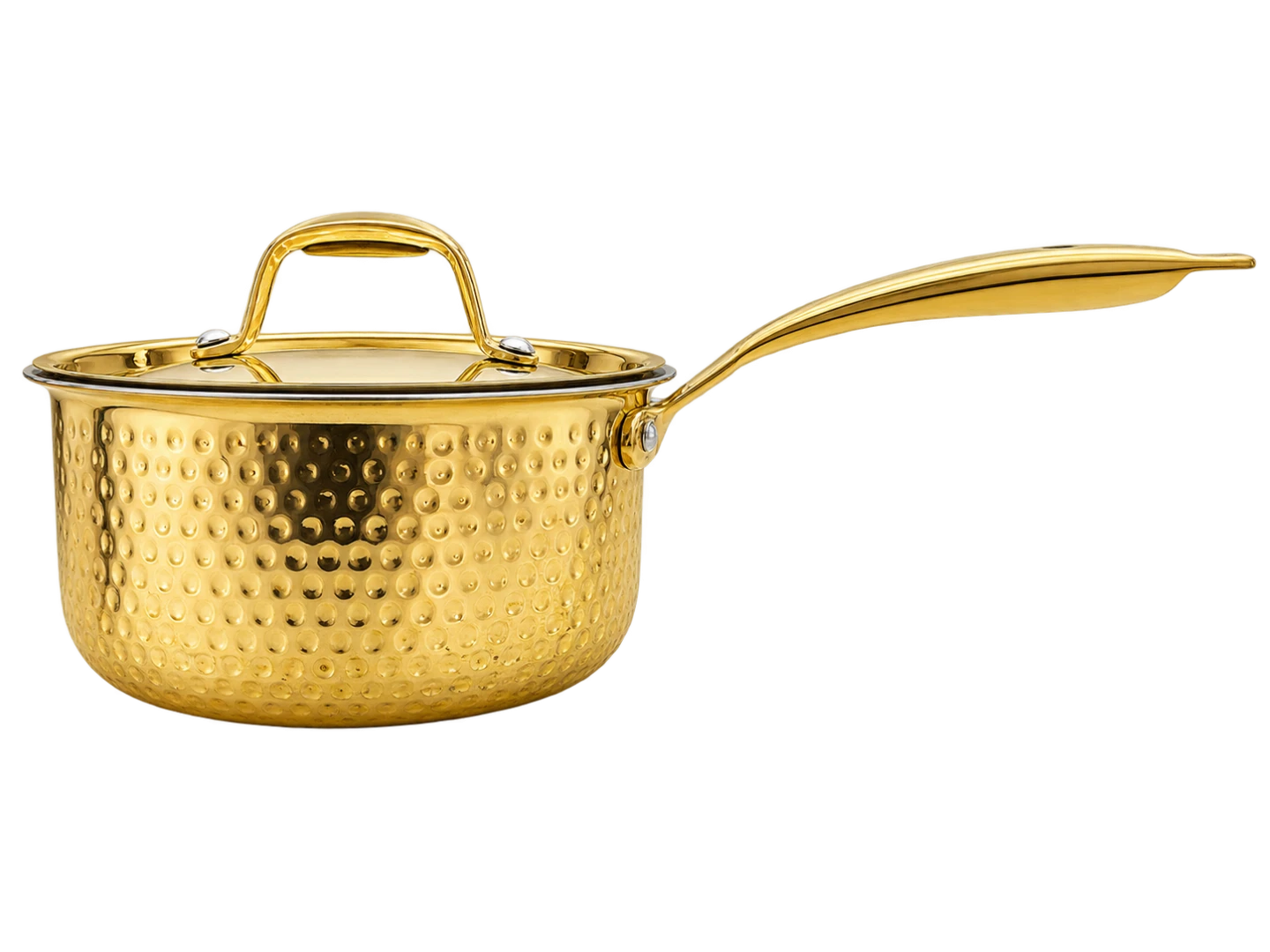
Traditional Brass Saucepan with Kalai – Hammered Finish
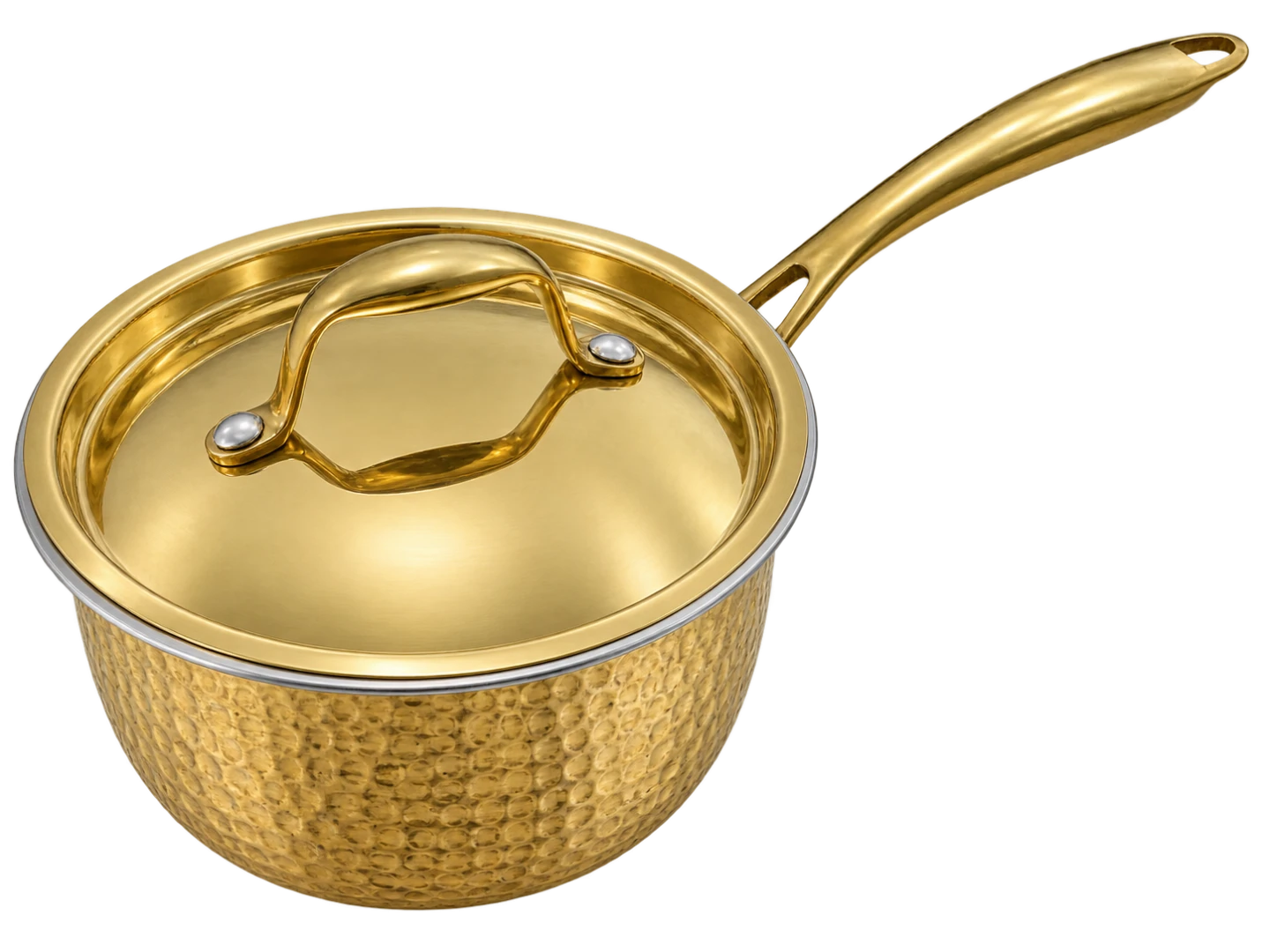
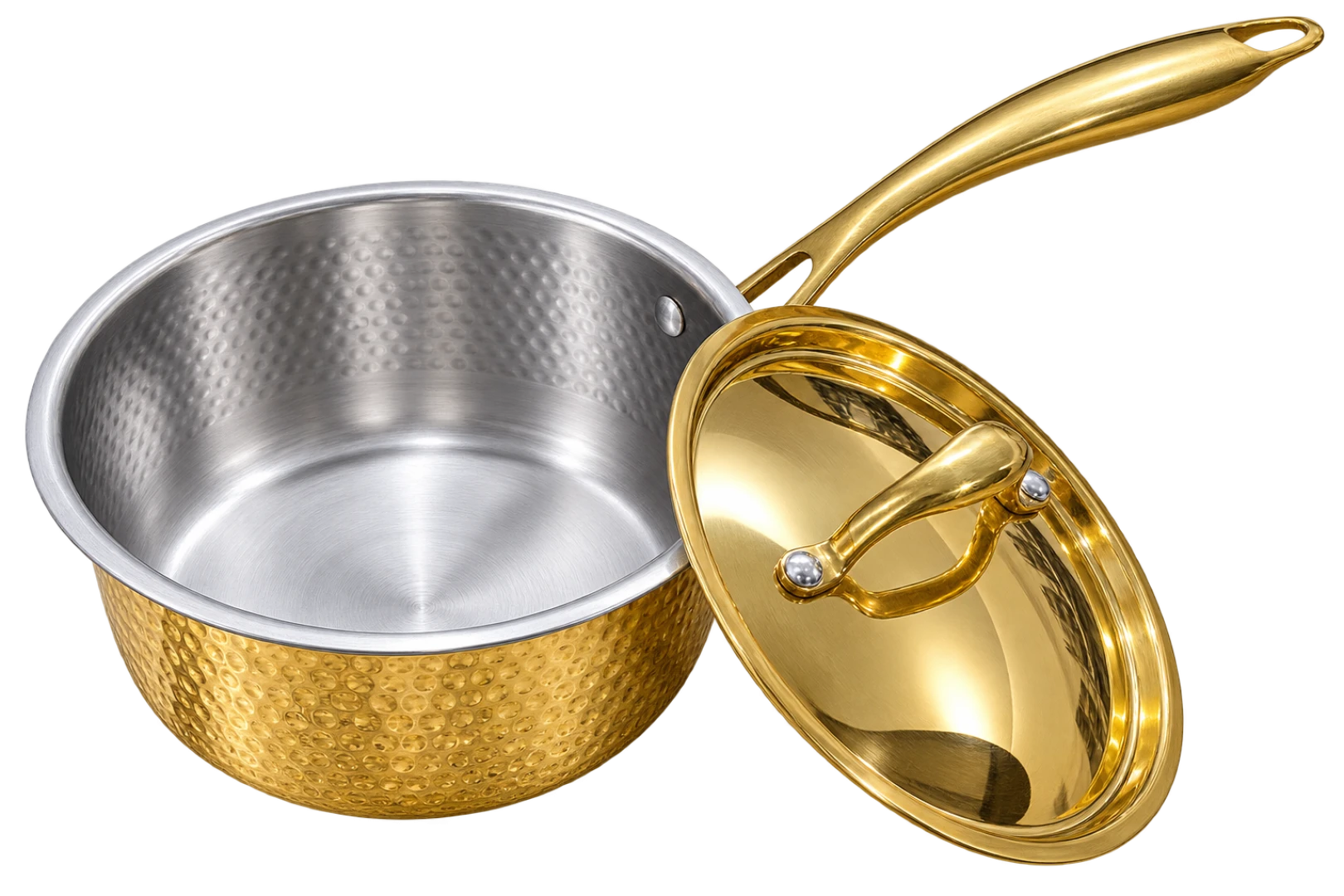
Bring the warmth of the traditional Indian kitchen into everyday cooking with this beautifully crafted Brass Saucepan with Kalai lining. Made from brass (pital) and finished with a distinctive hammered exterior, this saucepan combines traditional Indian metalware craftsmanship with a practical tin-lined cooking surface.
The saucepan comes with a matching lid and a long handle for convenient everyday use. Its rich golden brass exterior gives it an elegant, heritage-inspired character, while the silvery Kalai coating on the inside performs an important functional role during cooking.
Ideal for households that appreciate traditional cookware, this saucepan can be used for a wide variety of everyday preparations such as dals, gravies, vegetables, milk-based preparations, sauces, sweets and slow-cooked recipes, subject to proper care of the Kalai lining.
Brass – A Metal Deeply Connected with Indian Kitchens
Brass, known as Pital in India, is an alloy primarily made from copper and zinc. Brass utensils have been produced and used in India for centuries for cooking, serving, storage and ceremonial purposes. The Government of India’s Incredible India platform describes Pital Bartan as a longstanding part of Indian craft and household culture, including cooking pots, pans, plates, bowls and other kitchenware.
Brass has remained popular in traditional kitchens because it is:
-
Durable and long-lasting when maintained correctly.
-
Well suited to cookware construction because metals containing copper conduct heat effectively.
-
Capable of retaining warmth well during traditional styles of cooking and serving.
-
Naturally elegant, with a characteristic golden appearance that develops additional character with use.
-
Deeply associated with Indian culinary, hospitality and ceremonial traditions.
Its hammered surface also reflects a metalworking technique that has long been associated with traditional Indian brassware.
Why Is There Kalai Inside the Brass Saucepan?
The silver-coloured interior is Kalai, the traditional Indian practice of coating the food-contact surface of brass or copper cookware with a thin layer of tin.
Kalai is not merely decorative. It serves an important practical purpose.
Brass contains copper, and direct contact between unlined copper-containing cookware and certain foods—particularly acidic ingredients—can increase the migration of copper and other metals into food. Research has shown that acidic conditions and higher temperatures can substantially increase copper release, while lined cookware releases considerably less copper than unlined cookware.
Traditional Indian craftsmen understood this problem long before modern food chemistry explained it. INTACH's documentation of India's tin-coating tradition notes that Kalai has historically been applied to copper and brass utensils specifically to reduce the chemical action of sour and acidic foods on the metal.
The Kalai lining therefore:
-
Creates a barrier between the food and the brass body.
-
Reduces direct interaction between acidic food and the copper present in brass.
-
Helps prevent an unwanted metallic taste caused by direct metal-food reactions.
-
Allows traditional brass cookware to be used for a broader range of everyday recipes.
-
Can be renewed through the traditional process of re-Kalai or re-tinning when the coating eventually becomes worn.
Brass, Copper & Zinc – What Are the Genuine Health Facts?
Copper and zinc—the principal metals found in brass—are both essential nutrients required by the human body.
Copper contributes to functions including energy production, connective-tissue formation and the normal functioning of the nervous and immune systems. Zinc is required for immune function, DNA and protein production, growth and wound healing.
However, this does not mean that cooking in brass should be treated as a method of obtaining copper or zinc.
Excessive copper exposure can be harmful, which is one reason traditionally used brass cookware is lined with Kalai. The health-related advantage of a properly maintained Kalai-lined brass vessel is therefore better understood as responsible use of a traditional cooking material with a protective food-contact layer, rather than as a source of dietary mineral supplementation.
Traditional Beliefs About Brass, Purity & Positive Energy
In Indian culture, brass carries significance far beyond everyday cooking.
Brass vessels have traditionally been used during puja, festivals, weddings, religious rituals, hospitality and auspicious occasions. Government of India tourism material describing the traditional Pital Bartan craft notes that brass utensils are culturally associated with purity, prosperity and hospitality and are considered auspicious in many Indian households.
For this reason, many traditional households also associate brass vessels with positive energy, purity and an auspicious home environment.
These associations are an important part of Indian cultural tradition and belief. They should, however, be understood as traditional or spiritual beliefs rather than scientifically proven effects of brass cookware on a person's energy or health.
This saucepan therefore represents more than a cooking vessel—it brings together the look and craftsmanship of traditional Indian pital bartan with a practical Kalai-lined cooking surface.
Suitable for Everyday & Traditional Cooking
This Brass Saucepan with Kalai is a beautiful choice for:
-
Preparing dal and everyday Indian gravies
-
Cooking vegetables and traditional recipes
-
Milk and milk-based preparations
-
Preparing halwa, kheer and other sweets
-
Heating and simmering liquids
-
Slow cooking and traditional recipes
-
Festive and ceremonial cooking
-
Traditional kitchen collections
-
Wedding, housewarming and festive gifting
Care Instructions for Kalai-Lined Brass Cookware
Kalai is a traditional tin coating and requires gentler care than stainless steel.
For longer life of the lining:
-
Wash before first use.
-
Prefer low to medium heat for regular cooking.
-
Do not leave the saucepan empty on a high flame.
-
Always have food, water, milk, oil or another cooking medium inside before prolonged heating.
-
Use wooden, silicone or other non-scratching cooking utensils wherever possible.
-
Avoid steel wool, metal scrubbers and highly abrasive cleaning materials on the Kalai surface.
-
Hand wash using a soft sponge and mild dishwashing soap.
-
Do not aggressively scrape the silver-coloured inner lining.
-
Dry the vessel after washing.
-
Do not use the saucepan if large areas of the Kalai have worn away and brass is exposed on the cooking surface.
-
When the Kalai becomes substantially worn, have the utensil professionally re-tinned/re-Kalai'd before continuing regular cooking.
Tin is considerably softer than brass and has a melting point of approximately 232°C, which is why prolonged overheating of an empty tin-lined vessel should be avoided.
A Traditional Vessel Designed to Be Maintained, Not Discarded
One of the beautiful aspects of traditional Kalai cookware is its renewability.
Unlike many coated modern utensils that are discarded after their cooking surface deteriorates, the tin lining of traditional brass cookware can be renewed by a skilled Kalai artisan. The practice of periodically re-tinning brass and copper utensils has been part of Indian domestic life for generations.
With appropriate use, careful cleaning and timely renewal of the Kalai, a brass utensil can remain part of the kitchen for many years.
Important Note
The Kalai lining is a functional coating and may gradually develop marks, colour variation or signs of wear through normal cooking and washing. This is expected with traditionally tin-lined cookware and is not necessarily a manufacturing defect.
The health information above is provided for general awareness. This product should not be promoted as a treatment, cure, mineral supplement or medical device.
Visit Girdhar Das & Sons – Kitchenware & Dinnerware, Varanasi
Explore cookware, kitchenware, dinnerware and appliances at Girdhar Das & Sons, W.H. Smith School Road, Sigra, Varanasi.
Google Business Profile:
Girdhar Das & Sons – Kitchenware & Dinnerware on Google Maps
The Google listing corresponds to the Girdhar Das & Sons kitchenware store on W.H. Smith School Road, Sigra, Varanasi. Girdhar Das & Sons - Kitchenware & Dinnerware