
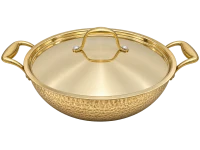
| Weight of Kadhai (With Lid) | 21.5 Kg approx |
| Weight of Kadhai (Without Lid) | 1.64 kg approx |
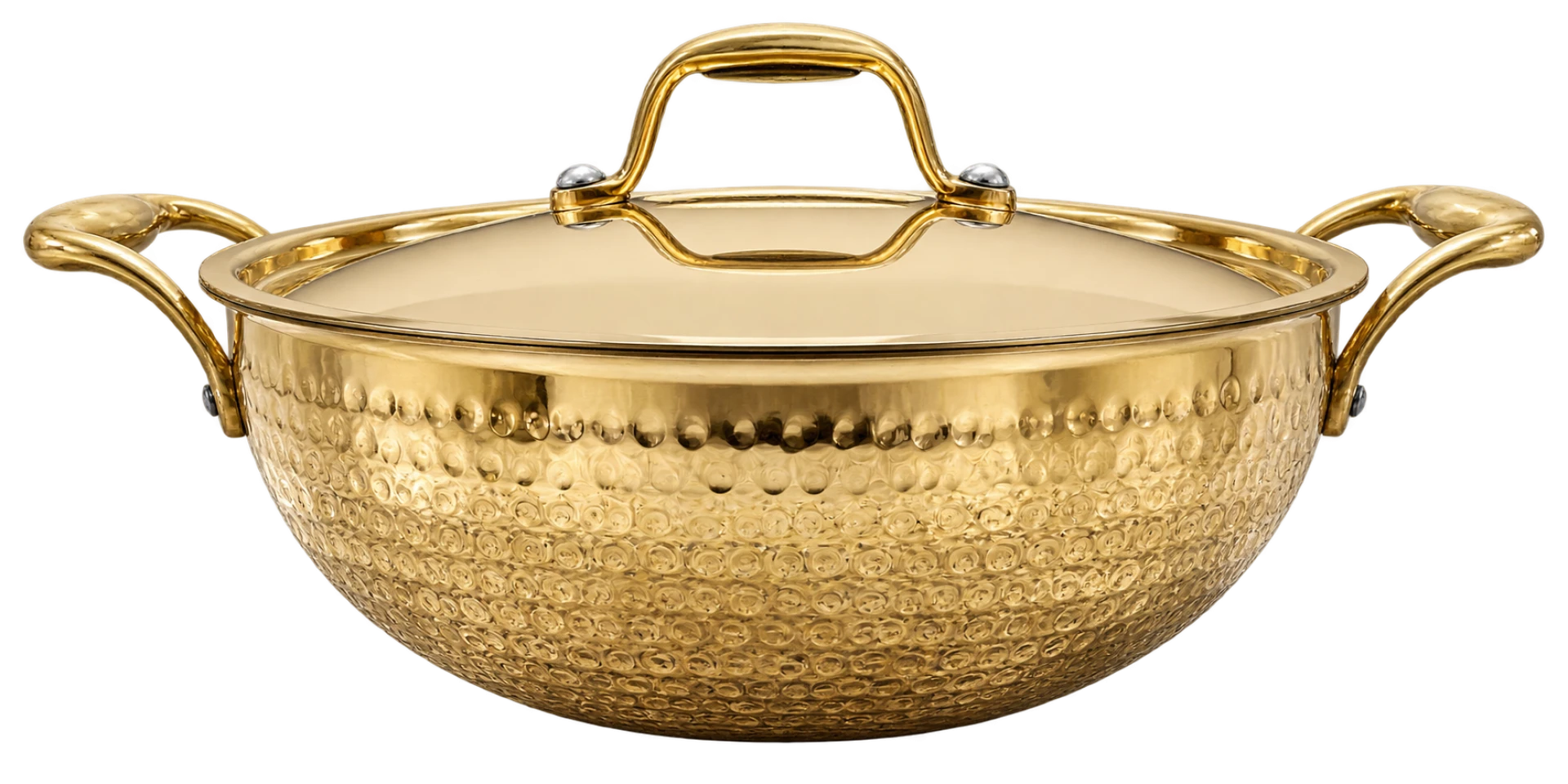
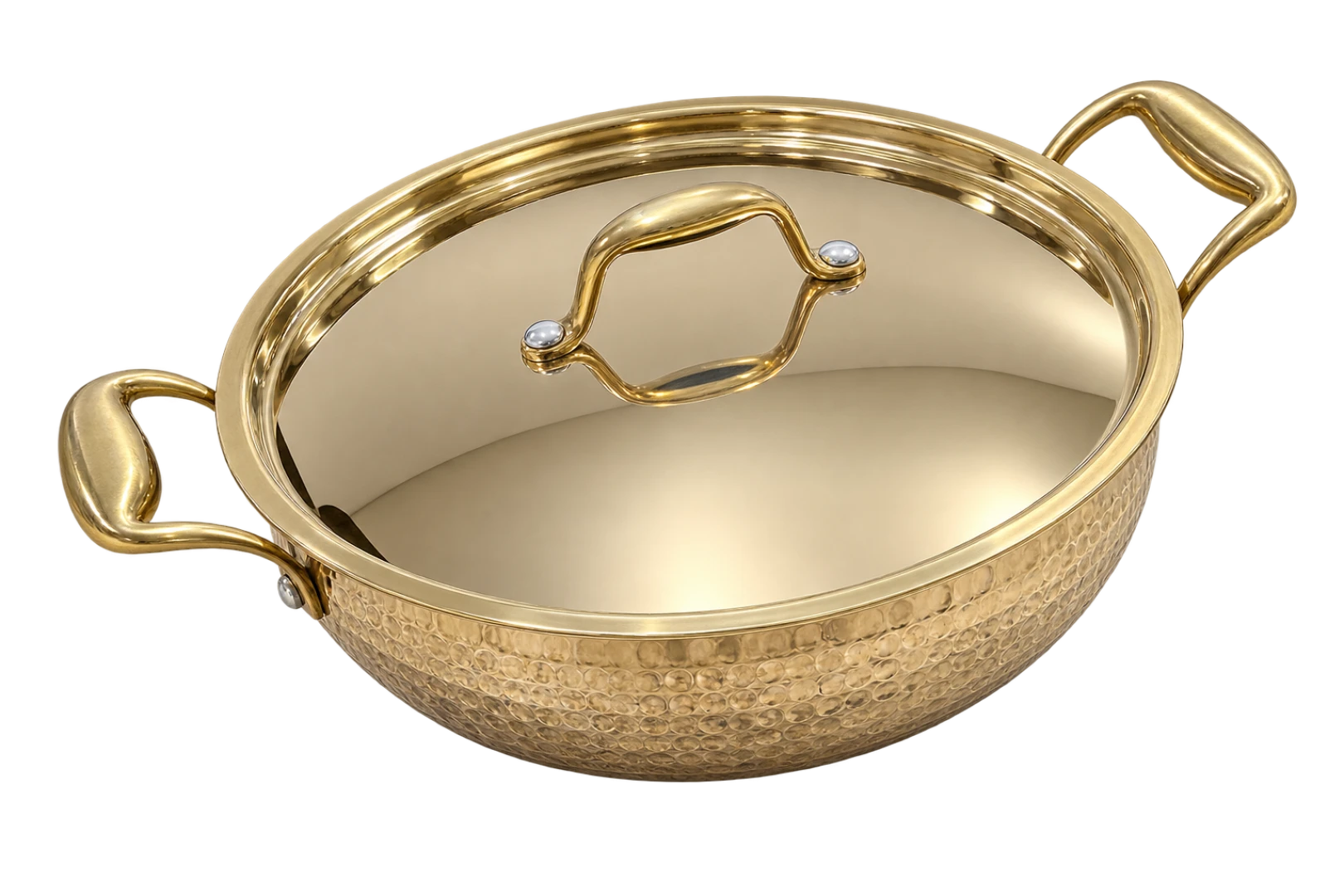
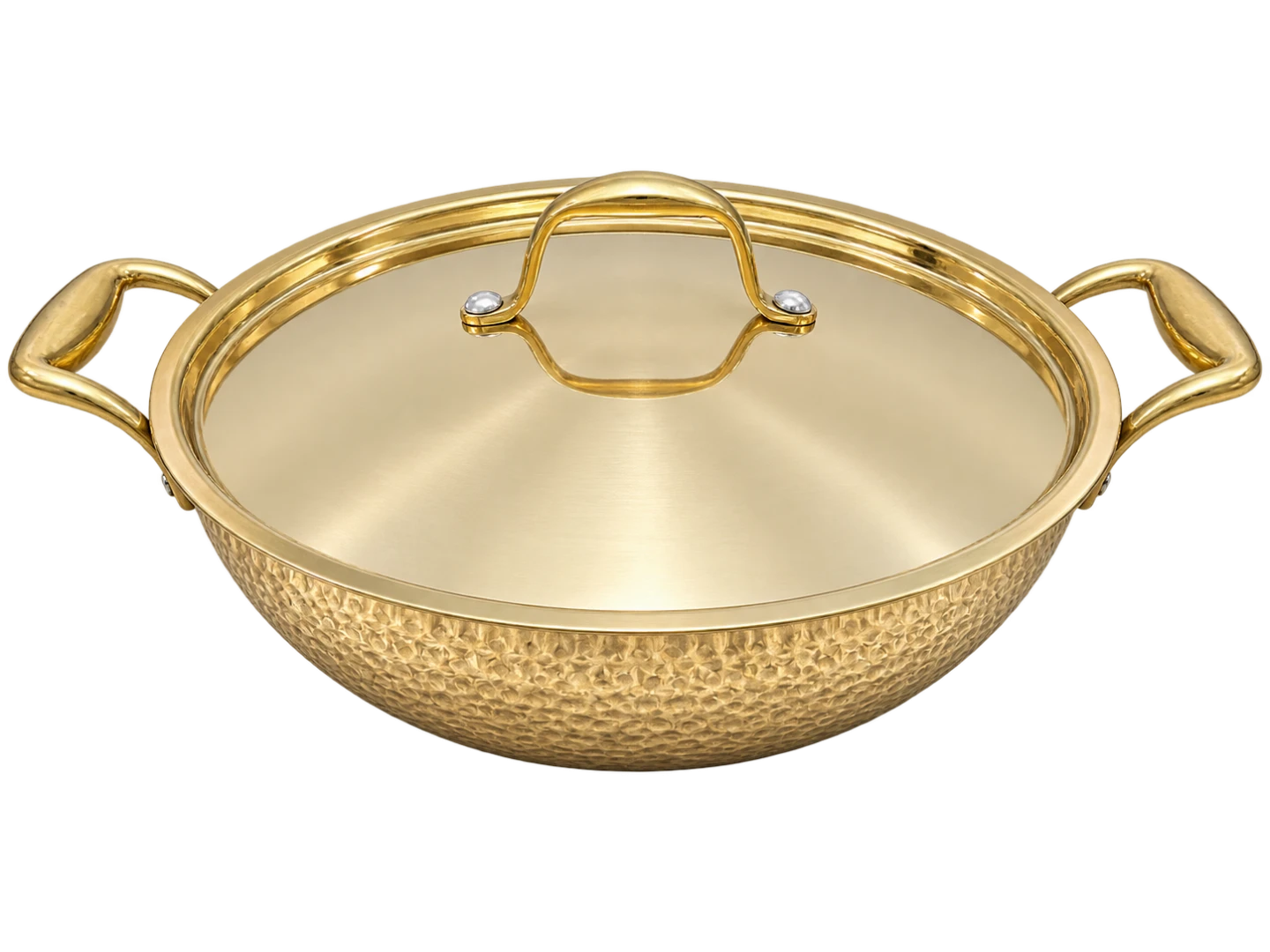
Traditional Brass Kadhai with Kalai – Hammered Finish & Lid
Rediscover the charm of traditional Indian cooking with this beautifully crafted Brass Kadhai with Kalai lining, designed for households that value heritage cookware, functional craftsmanship and timeless presentation.
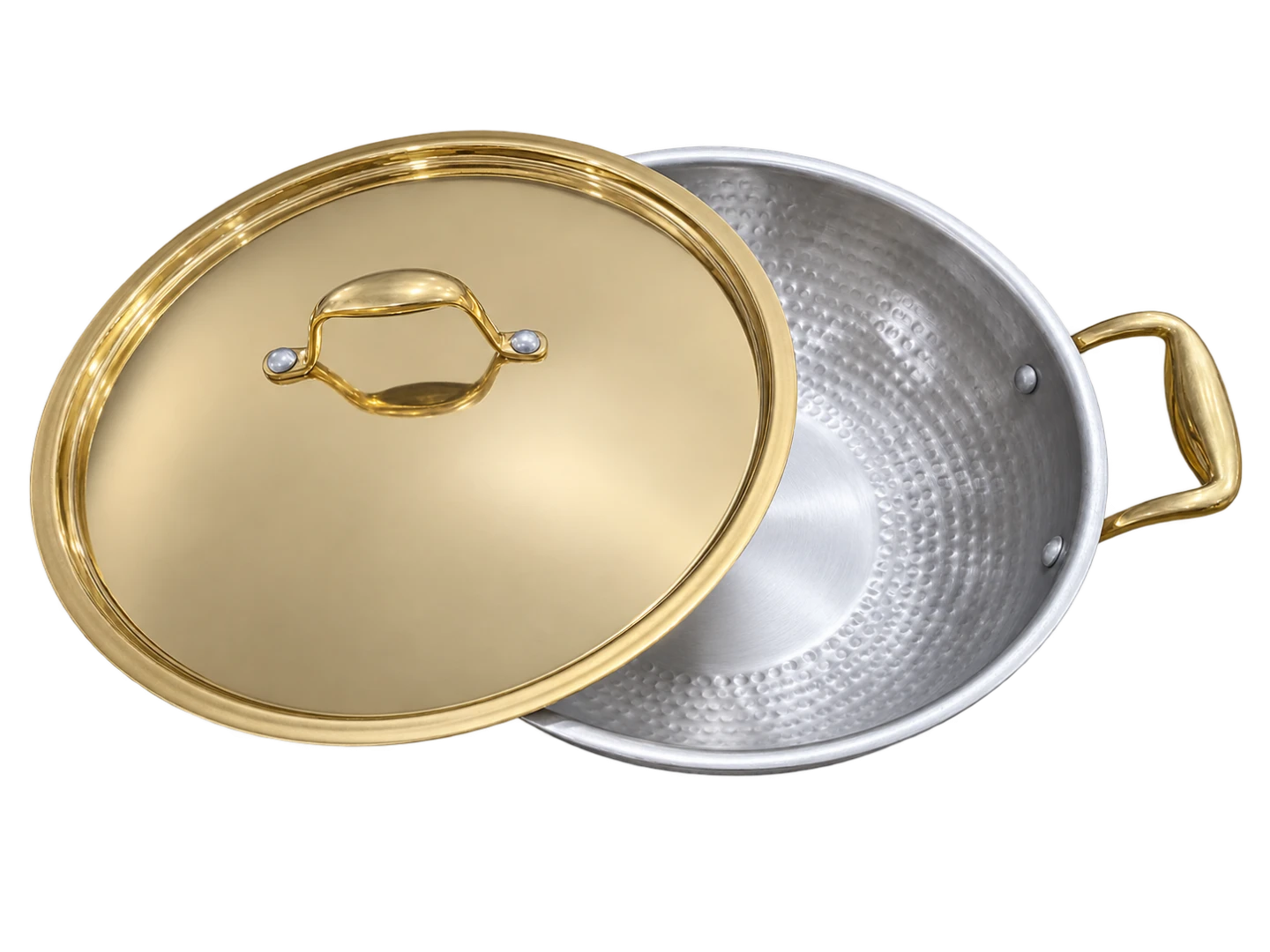
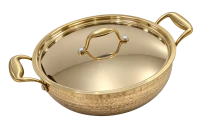
Made from brass (Pital) with a traditional hammered exterior, this Kadhai features a protective Kalai (tin) lining on the inner cooking surface, two sturdy side handles and a matching brass lid. Its rich golden appearance makes it equally suitable for everyday Indian cooking, traditional preparations, festive kitchens, serving and gifting.
The combination of a brass body and tin-lined interior reflects a cookware tradition that has been part of Indian households for generations.
Brass – A Traditional Metal of the Indian Kitchen
Brass, commonly called Pital, is primarily an alloy of copper and zinc.
Brass utensils have a long history in Indian homes and have traditionally been used for cooking, serving, storage and ceremonial purposes. Government of India tourism documentation on Pital Bartan describes brass cookware such as cooking pots, pans, plates and bowls as part of a centuries-old Indian metalworking tradition, including techniques such as hammering, embossing and polishing.
Brass has traditionally been valued for several practical qualities:
-
Good heat conductivity, helping heat spread efficiently through the cookware.
-
Durability when correctly used and maintained.
-
Suitability for a wide variety of traditional Indian cooking preparations.
-
A naturally rich golden appearance that gives the utensil a distinctive traditional character.
-
The ability to be maintained and restored rather than being treated as disposable cookware.
The hammered exterior further complements the traditional character of Indian Pital Bartan.
Why Does This Brass Kadhai Have Kalai Inside?
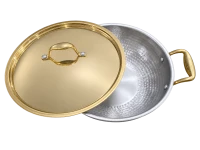
The silver-coloured inner surface is known as Kalai.
Kalai is the traditional process of applying a thin coating of tin to the food-contact surface of brass or copper cookware.
It is not merely decorative.
Brass contains copper, and copper-containing surfaces can react more strongly with sour or acidic foods. Historical documentation from INTACH specifically records that tin coating was traditionally applied to copper and brass utensils because it reduces the chemical action caused by sour or acidic foods.
Therefore, a properly maintained Kalai lining:
-
Creates a protective layer between the food and the brass body.
-
Reduces direct interaction between food and the copper contained in brass.
-
Makes traditional brass cookware more practical for everyday Indian cooking.
-
Helps reduce unwanted reactions that can occur between acidic ingredients and an unlined copper-containing surface.
-
Provides a smooth food-contact surface while preserving the benefits and character of the brass body underneath.
Why Kalai Is an Important Part of Traditional Brass Cookware
Indian cooks have used Kalai-lined brass and copper cookware for generations.
The practice was sufficiently established that historical records documented the regular re-tinning of copper utensils in royal kitchens. INTACH's historical research describes the profession of the Kalaiwala or Kalhaigar, artisans specialising in applying and renewing tin coatings on domestic utensils.
An important advantage of traditional Kalai cookware is that the lining is renewable.
When it eventually wears down after prolonged use, the utensil does not necessarily need to be discarded. A skilled Kalai artisan can remove the worn surface and apply a fresh tin lining, extending the useful life of the vessel.
Genuine Health Facts About Brass
Because brass consists primarily of copper and zinc, it is sometimes associated with health benefits. These claims need to be understood correctly.
Copper and zinc are both essential nutrients required by the human body.
Copper contributes to important biological functions including energy production, formation of connective tissue and blood vessels, and normal nervous and immune-system function.
Zinc is also an essential nutrient involved in normal immune function, DNA and protein synthesis, growth and wound healing.
However:
Cooking in brass cookware should not be promoted as a way of obtaining copper or zinc.
More copper is not automatically better. Excessive copper exposure can be harmful, which is precisely why proper lining and responsible use of copper-containing cookware are important.
The practical health-related benefit of a properly maintained Kalai-lined brass Kadhai is therefore better understood as the combination of:
Traditional brass cookware + a protective tin food-contact surface + appropriate cooking and maintenance practices.
It should not be considered a mineral supplement or a treatment for any health condition.
Brass, Purity & Positive Energy – The Traditional Indian Belief
Brass also occupies an important place in Indian religious and cultural traditions.
Brass utensils have traditionally been used in puja, festivals, weddings, religious ceremonies, hospitality and auspicious household occasions.
Government of India tourism material describing India's brassware tradition notes that Pital Bartan is culturally associated with prosperity, purity, hospitality and auspiciousness.
For this reason, many Indian traditions and households associate brass vessels with:
-
Shuddhata or purity
-
Prosperity and abundance
-
Auspicious beginnings
-
Positive energy in the home
-
Traditional hospitality
These are meaningful cultural and spiritual beliefs, but they should not be presented as scientifically proven physiological effects of brass.
This distinction allows the product to honour Indian tradition without making unsupported medical claims.
Ideal for Indian Cooking
The deep, rounded Kadhai form makes this vessel particularly useful for a wide range of Indian preparations, including:
-
Dal and curry preparations
-
Sabzi
-
Gravy-based dishes
-
Paneer dishes
-
Traditional sweets
-
Halwa and kheer
-
Milk-based preparations
-
Slow-cooked recipes
-
Festive preparations
-
Traditional family recipes
-
Cooking as well as elegant table presentation
The accompanying lid helps cover the vessel during simmering and resting and also makes the Kadhai suitable for serving directly at the dining table.
Beautiful Enough for Serving
Beyond cooking, the polished golden brass exterior and handcrafted hammered texture give this Kadhai a rich traditional appearance.
It can transition beautifully from the kitchen to the dining table, making it especially suitable for:
-
Family gatherings
-
Festival meals
-
Traditional dining
-
Wedding gifting
-
Housewarming gifts
-
Festive gifting
-
Heritage cookware collections
Natural variations in hammered texture and finish are part of the character of traditional metal cookware and contribute to the individuality of each piece.
How Long Does Kalai Last?
Kalai does not have a fixed lifespan.
Its life depends on:
-
Frequency of use
-
Cooking temperature
-
Type of food being prepared
-
Cleaning method
-
Whether metal or abrasive utensils are used
-
Whether the Kadhai is overheated while empty
With careful household use, Kalai can remain serviceable for a considerable period, but it should be inspected periodically rather than judged only by age.
When substantial areas of the silver-coloured tin lining have worn away and the yellow brass underneath becomes exposed on the food-contact surface, the vessel should be professionally re-Kalai'd before continued regular cooking.
Re-Kalai – A Renewable Traditional Coating
One of the advantages of traditional brass cookware is that the Kalai can be renewed.
Re-Kalai should be carried out by an experienced Kalaiwala/Kalhaigar using suitable tin intended for traditional utensil tinning.
INTACH documents Kalaiwallas as traditional craftsmen who specialise in the tin-coating of brass and copper household utensils.
The need for Re-Kalai is therefore normal maintenance associated with traditional tin-lined cookware and is not, by itself, a manufacturing defect.
Care Instructions
Proper care can significantly extend the useful life of both the Kadhai and its Kalai lining.
For best results:
-
Wash thoroughly before first use.
-
Prefer low to medium heat for normal cooking.
-
Do not leave the Kadhai empty over a high flame.
-
Add oil, water, milk, food or another cooking medium before prolonged heating.
-
Avoid excessive overheating.
-
Prefer wooden, silicone or other non-scratching utensils.
-
Avoid repeatedly scraping the interior with sharp metal utensils.
-
Do not use steel wool or aggressive metal scrubbers on the Kalai.
-
Clean with a soft sponge and mild dishwashing liquid.
-
Avoid highly abrasive powders on the inner lining.
-
Wash and dry the vessel after use.
-
Natural dulling or colour variation of the exterior brass may occur over time.
-
Brass polish may be used on the outer brass surface only, according to the polish manufacturer's directions.
-
Do not aggressively polish or abrade the Kalai-lined interior.
-
Inspect the inner tin coating periodically.
-
Arrange professional Re-Kalai when substantial brass begins to become visible through the cooking surface.
Important Product Note
Traditional metal cookware naturally develops signs of use over time.
Minor differences in:
-
Hammering
-
Surface texture
-
Polish
-
Colour tone
-
Small finishing marks
may occur and are characteristic of this style of cookware rather than necessarily being defects.
Similarly, Kalai is a renewable functional coating. Gradual wear of the inner tin layer through cooking and cleaning is expected over its service life.
A Piece of Indian Cooking Heritage
The Traditional Brass Kadhai with Kalai – Hammered Finish & Lid brings together three qualities that have kept brass cookware relevant across generations:
Traditional craftsmanship. Practical cooking performance. Timeless Indian aesthetics.
The brass body connects the vessel to India's long-established Pital Bartan tradition, while the Kalai-lined interior reflects the practical knowledge through which generations adapted brass cookware for everyday cooking.
Whether used for preparing a family recipe, serving a festive meal or presented as a meaningful wedding or housewarming gift, this Kadhai is designed to bring the character of India's traditional kitchen into the modern home.
Visit Girdhar Das & Sons – Kitchenware & Dinnerware, Varanasi
Explore traditional cookware, kitchenware, dinnerware, appliances and more at Girdhar Das & Sons, Sigra, Varanasi.
Google Business Profile:
View Girdhar Das & Sons on Google Maps
More Brass Cookware Products
-
Traditional Brass Kadhai With Kalai – Hammered Finish
Cookware(30.3% off)Rs. 5,646.00Rs. 8,100.00 -
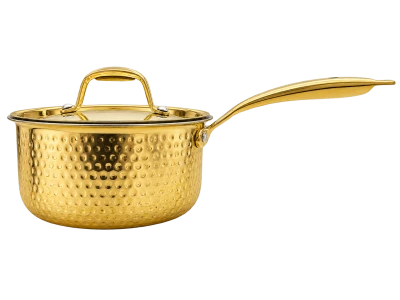
Traditional Brass Sauce Pan With Kalai – Hammered Finish
Cookware(32.11% off)Rs. 3,055.00Rs. 4,500.00